
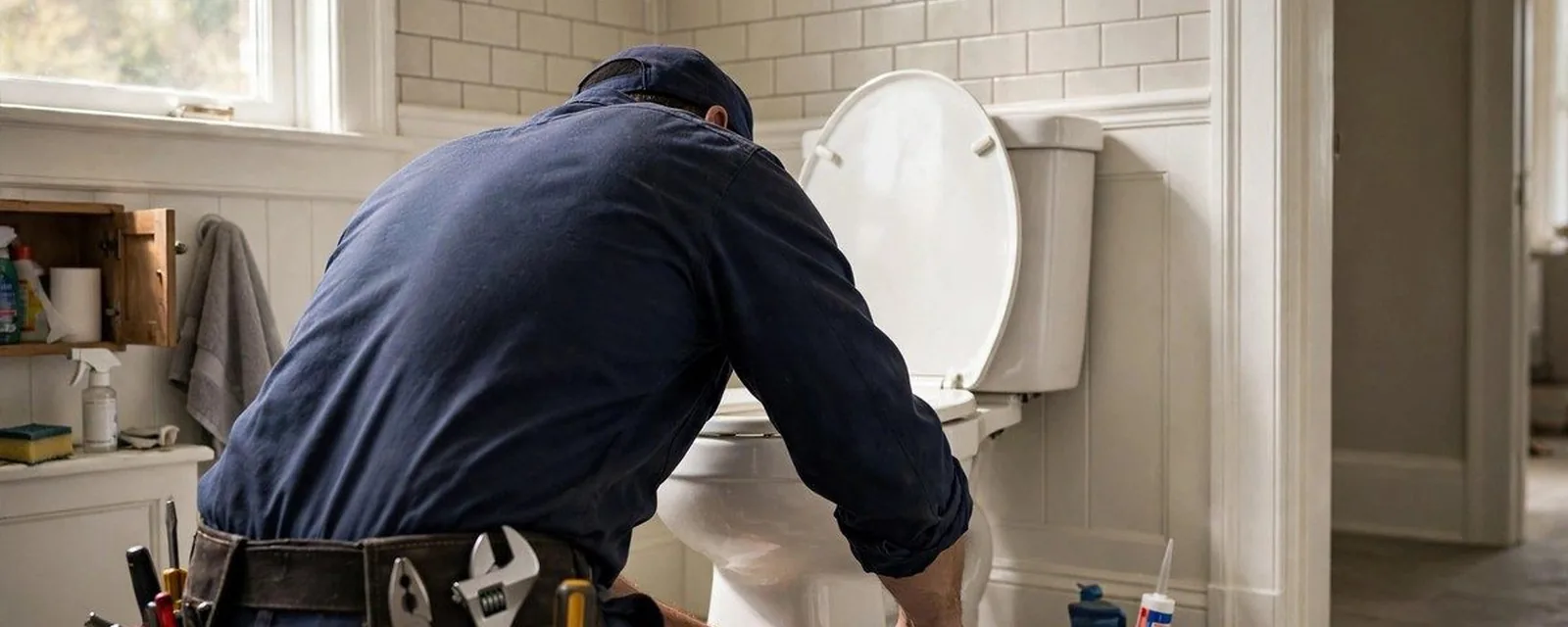
Signs the flapper is failing
- The toilet runs for a few seconds every so often with no flush.
- You hear hissing or trickling from the tank.
- The handle needs a hold to complete a flush.
- Food coloring in the tank shows up in the bowl within about fifteen minutes without a flush.
A flapper wears because rubber hardens, warps and picks up mineral film. Chemical tank tablets can speed that up.
Replacing the flapper
- Turn off the water. Close the supply valve behind the toilet and flush to empty the tank.
- Remove the old flapper. Unhook the chain and slip the ears off the overflow tube pegs.
- Match the new part. Bring the old one to the store. Sizes and styles vary, and a wrong match will leak.
- Install and adjust the chain. Leave a little slack so the flapper seats fully, without a loop that gets caught.
- Restore water and test. Open the valve, let the tank fill and flush. Check the dye test again.
Toilet still running after the swap? Call for a plumber.
Call (650) 860-1670| Symptom | Other likely cause | Fix |
|---|---|---|
| Runs after a new flapper | Worn flush valve seat | Clean or replace the valve |
| Tank keeps filling | Fill valve or float set too high | Adjust or replace |
| Water at the base | Seal or bolts | Reset the toilet |
| Weak flush | Clogged rim jets | Clean them |
Why a running toilet matters
A running toilet can waste a lot of water over a day, and you may not hear it. Part of the cost is a silent leak. That is why a flapper repair is worth doing promptly. For other toilet faults and the choice to repair or replace, see toilet repair.
Choosing the right replacement flapper
Flappers come in several sizes and shapes. Most toilets use a two-inch flapper. Newer high-efficiency models often use a three-inch version, and some have a flush valve that takes a specific brand. Look at the old part for a size mark, and check the manual or the tank for a model name.
Adjustable universal flappers fit many tanks and can be set to the right flush length. Brand-specific parts fit exactly but cost more. If your old flapper does not match anything in the store, bring a photo to a plumbing supply counter.
Care that keeps a flapper working longer
- Avoid chemical tank tablets, which can break down rubber.
- Wipe mineral film from the valve seat when you change the flapper.
- Check the chain length once a year. Slack that is too long gets caught under the flapper.
- Do a dye test every year or so to catch a slow leak early.
What a silent leak costs
A flapper that leaks slowly may never make a sound. The tank loses a little water, the fill valve tops it up and the meter turns. Over weeks that adds to the water bill and, in a household on a tiered rate, can move usage into a more expensive band.
The dye test is a quick way to find such a leak. A drop of coloring in the tank, fifteen minutes with no flush and a look at the bowl is all it takes.
A five-minute dye test, step by step
- Add color. Put a few drops of food coloring in the tank. Do not flush.
- Wait. Leave it for about fifteen minutes without anyone using the toilet.
- Look at the bowl. If the water has taken on the color, the flapper is letting tank water through.
- Fix and repeat. Replace the flapper, then repeat the test to confirm.
Flush afterward so the coloring does not stain the tank. The test costs almost nothing and finds leaks that can run unnoticed for months.
Fill valve and overflow tube: the other two parts
A running toilet is not always the flapper. The fill valve controls how much water enters the tank, and the overflow tube is the safety drain inside it. If the water level sits above the top of the overflow tube, water spills down it continuously and the toilet runs. Lowering the float a little fixes that.
Fill valves also wear out and begin to hiss or fail to shut off. A replacement valve is a short job with a wrench, and many fit most tanks. If you are already replacing the flapper on an older toilet, ask yourself whether the fill valve is the same age and due too.
Using the City's meter test for silent toilet leaks
The City of Mountain View's meter check can tell you whether a toilet leak is costing you. With every fixture off, watch the small triangle or asterisk on the meter dial for a couple of minutes. If it turns, close the house valve to see whether the leak is inside the house or between the house and the meter. A toilet leak is inside the house.
The City's conservation page also says a free do-it-yourself leak kit is available at 408-630-2554 and that a one-time bill reduction may be possible after a leak is fixed. If the leak is hidden in a wall, leak detection finds it. In Los Altos, ask your own water provider.
If the repair is beyond a flapper, the service area page shows the towns we dispatch to.
A flapper swap is a repair, not a new installation, so the California Plumbing Code matters here only if the toilet or its flange has to be reset.
Know when to stop, and what to do next
If the tank or bowl is cracked, the flange is loose or the supply valve will not close, the repair is beyond a flapper. A plumber can fix or replace the toilet. Keep the old part in case you need to match another.
Questions about this topic
How do I know if my toilet flapper is bad?
Run a dye test. Put food coloring in the tank and wait. If the bowl changes color without a flush, the flapper leaks.
How long does a flapper last?
A few years, depending on the water and the chemicals in the tank.
Can I use a universal flapper?
Sometimes. A flapper matched to the valve size and style seals best.
Why does my toilet run after I replaced the flapper?
The valve seat may be worn or the chain too tight.
Does the City of Mountain View help with leak bills?
The City's conservation page says a one-time bill reduction may be available after a leak is fixed.