
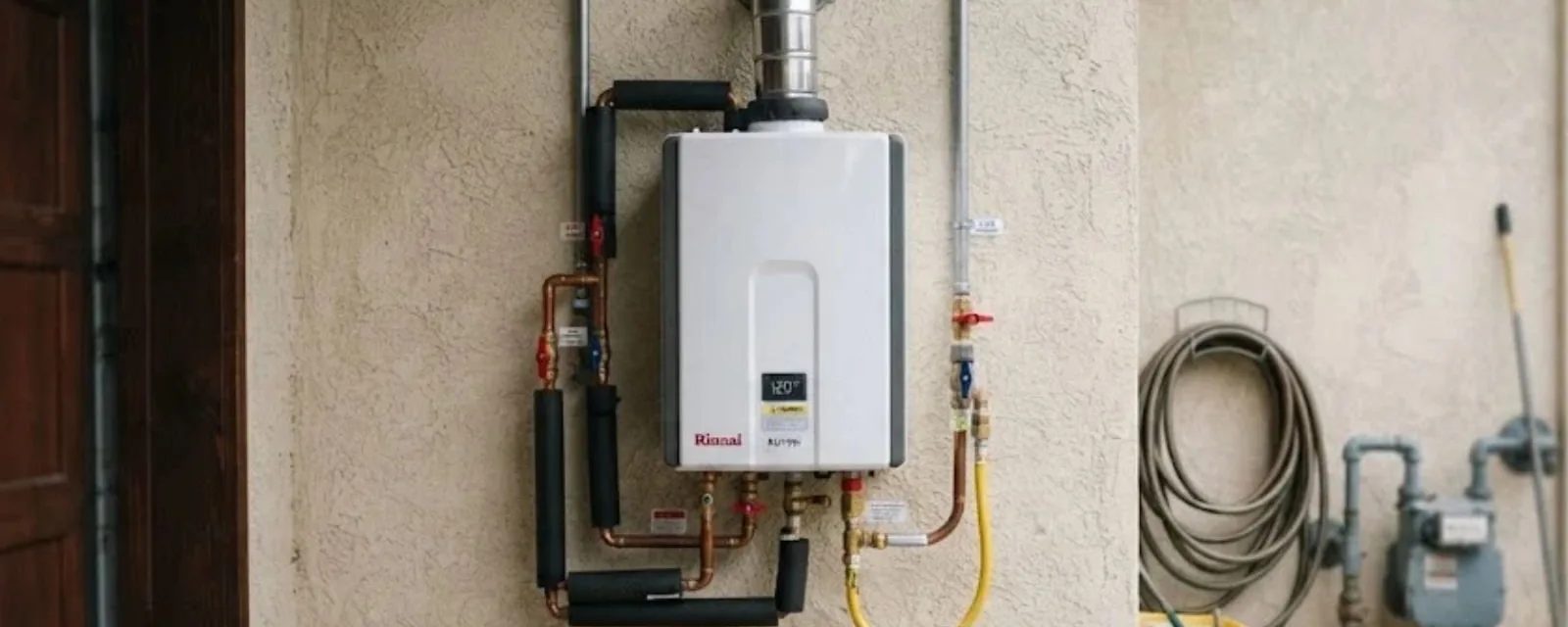
How tankless units differ from a tank
A tank heater stores a fixed volume of hot water. When it is used up, you wait. A tankless unit fires a burner or elements when a tap opens and raises the incoming water to temperature as it passes through a heat exchanger.
That changes the demands on the house. The unit needs a gas line sized for its burner, proper venting and a drain for condensate in high-efficiency models. A tank heater in the same spot may have a smaller gas line that has to be upgraded.
Where tankless pays off and where it does not
Tankless suits households with steady hot water demand and limited space, and people who have run out of hot water with a tank. It is less compelling if installation requires major gas or venting rework in a home with a simple tank setup.
Two things often decide it. The first is gas capacity, because a tankless burner needs much more than a tank. The second is the plumber's honest look at your layout. If you have multiple bathrooms far from the heater, a recirculation line may matter as much as the unit.
Thinking tankless? Call for an honest site check.
Call (650) 860-1670Flushing and maintenance
- Isolate the unit. Service valves on the inlet and outlet let the plumber close the unit off and connect hoses.
- Circulate a descaling solution. A pump runs the solution through the heat exchanger to dissolve mineral buildup.
- Flush and rinse. Clean water flushes the solution out. The inlet screen is checked and cleaned.
- Test. Flow, temperature and error codes are checked before the plumber leaves.
Most manufacturers recommend periodic flushing. How often depends on your water and your usage, and the manual for your model has the schedule. A unit that shows scale-related error codes is already overdue.
| Symptom | Likely cause | Typical action |
|---|---|---|
| Hot water turns cold briefly | Low flow below the activation threshold, or scale | Flush, check flow |
| Error code on display | Ignition, flame sensor or venting fault | Diagnose, may need a part |
| Water is not as hot as set | Scale, undersized gas, or demand above rating | Flush, check gas |
| Unit clicks but does not light | Flame rod, gas supply or control board | Repair |
What drives tankless pricing
- The unit. Output rating and efficiency change the equipment cost.
- Gas line. A larger gas line is often the biggest add-on.
- Venting. A new vent path through the wall or roof adds cost.
- Condensate drain. High-efficiency units need one.
- Permit. Mountain View requires a permit for water heater installation.
Because tankless installs vary a lot, the plumber gives a written quote only after seeing the gas line, vent route and location. Flushing is priced separately from installation.
Questions to ask before a tankless service call
- What is the model and age of the unit, and is there an error code on the display?
- When was it last flushed?
- Are isolation valves with service ports installed?
- Is the problem at every fixture or only some?
- Has the gas supply or the venting been changed since it was installed?
Having those answers ready shortens the visit and helps the plumber bring the right parts.
Water supply and scale
The City's published water reports say most of Mountain View's supply comes from the San Francisco Public Utilities Commission, with Valley Water and local groundwater making up the rest, and the mix can vary across the year. We do not quote a hardness figure here because it depends on the source and the season. Ask the City or your water provider for the current number, and expect flushing to matter most when hardness is higher.
Gas, venting and condensate connections for a tankless unit sit under the California Plumbing Code alongside the maker's installation manual.
Tankless water heater questions
How often should a tankless heater be flushed?
Follow the manufacturer's schedule for your model. Hard water and heavy use call for more frequent flushing.
Can my gas line support a tankless unit?
Maybe. Tankless burners need more gas than a tank, so the plumber checks line size and meter capacity before quoting.
Why does my tankless heater give cold bursts?
Often the flow is below the unit's activation threshold, or scale is limiting heat transfer. A flush and a flow check usually find it.
Do tankless heaters need a permit in Mountain View?
Yes. The City requires a permit for every water heater installation and replacement.
Do you repair tankless units?
Yes. Many faults are scale, flame sensor or venting issues that can be fixed on site.