
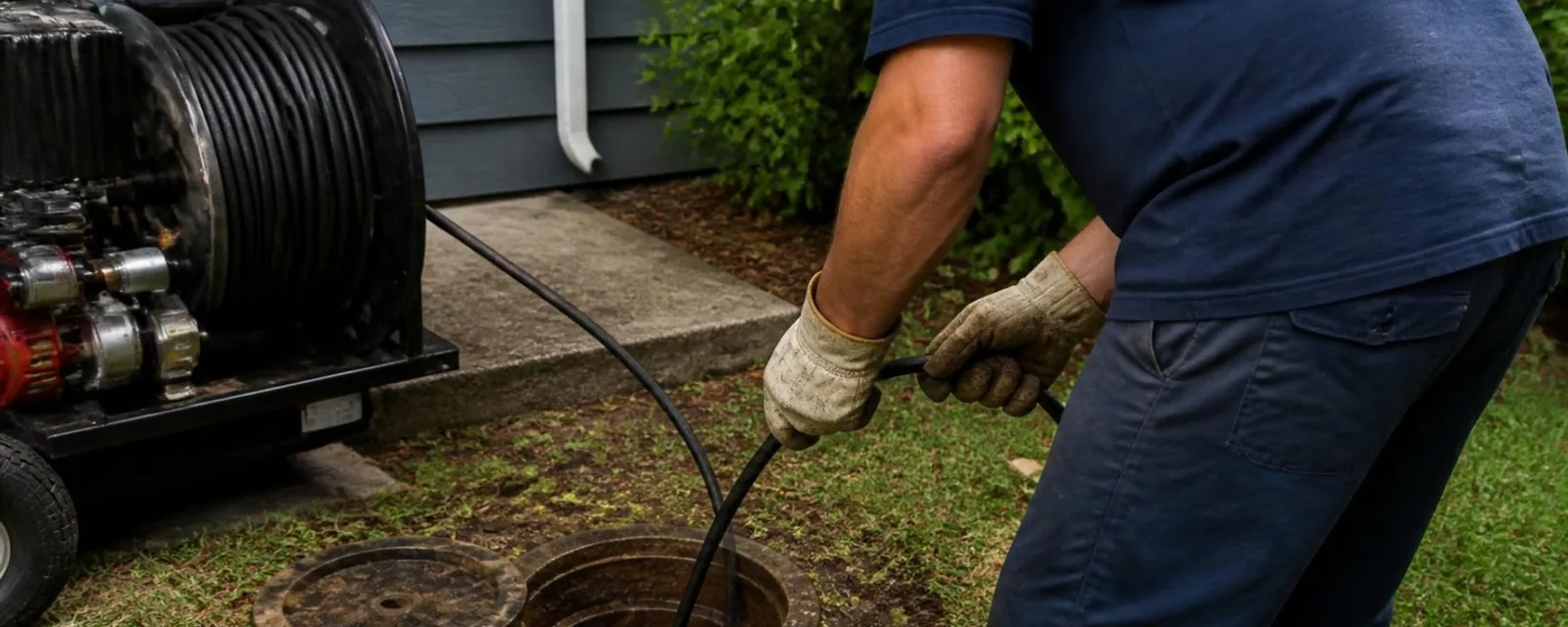
Stop here and call if the drain is backing up
Some blockages are slow and can wait for a normal appointment. These cannot: water or sewage rising in a tub, shower or floor drain when you flush or run the washer, several fixtures gurgling at once, or a kitchen sink that will not drain and is filling the second basin.
Stop running water. Every gallon you send down a blocked line ends up on a floor. Pull the washing machine plug, hold off on showers and keep children and pets away from standing water that came up out of a drain.
How we find where the blockage sits
The first question is how many fixtures are affected, because that tells the plumber where the blockage is. One slow sink points to its own trap or branch. A tub and a toilet that both misbehave point to a shared branch. Every drain in the house backing up points to the main line or the lateral.
- Ask and test. We confirm which fixtures run, which gurgle and which back up before touching anything.
- Reach the line. The plumber opens the closest cleanout or pulls the trap or toilet when there is no access point.
- Clear it. A cable machine with the right head breaks through hair, paper, grease or soft roots. If the cable meets a hard stop, the plumber stops and tells you what it suggests.
- Test the flow. Water is run for several minutes to confirm the line drains, not just that the cable went through.
Cable, jet or camera, and how the choice gets made
A cable is the first tool for most clogs because it is fast and does not need much access. It punches a hole through the blockage, but it can leave a coating of grease or scale on the pipe wall that rebuilds into a new clog.
When that coating is the problem, hydro jetting scours the wall clean. When the same drain stops again within a few weeks, a sewer camera inspection is the honest next step because something in the pipe, such as a belly or a root intrusion, is catching debris. Do not keep paying for cable passes on a pipe that needs repair.
Drain backing up now? A licensed plumber is dispatched 24/7.
Call (650) 860-1670| Symptom | Likely location | Typical first step |
|---|---|---|
| One sink drains slowly | That fixture's trap or branch | Cable or trap clean-out |
| Tub gurgles when the toilet flushes | Shared branch line | Branch line cable |
| Water rises in the lowest drain when you run laundry | Main drain or lateral | Cleanout cable, then camera if it repeats |
| Smell of sewer gas with no visible backup | Dry trap or venting problem | Trap check, vent inspection |
| Same drain clogs every few weeks | Pipe damage or scale | Camera inspection and jetting |
What decides the price of a drain cleaning
- Which line is blocked. A single fixture drain is simpler than a main line, which needs a larger machine and more cable.
- Access. A cleanout in the yard is quick. If the plumber has to pull a toilet to reach the line, the job takes longer.
- What is in the pipe. Soft paper blockages clear faster than grease build-up or woody roots.
- Time of call. After-hours and holiday dispatch costs more than a daytime appointment.
- Add-ons. A camera look or a jetting pass after the cable is priced separately and only done if you want it.
Your homeowner's policy may treat sudden water damage differently from a gradual leak, and sewer backup coverage is often a separate endorsement. Ask your insurer before you assume either way. We give you a clear price on the phone and again on site before work starts.
Storm drains are not the same as sewer drains
Rain runoff that enters street inlets and yard drains travels through a storm system, which is separate from the sewer that carries water out of your fixtures. A blocked yard drain, area drain or downspout line can flood a patio or a garage during winter storms even when every sink in the house drains well.
We clear private yard and area drains with snakes and water jetting. Storm inlets in the public street belong to the City, so report those to Mountain View directly. Keep leaves and debris off the grates, and never pour paint, oil or cleaning chemicals into any outdoor drain.
What the City says about who clears what
The City of Mountain View's water and sewer FAQ states that property owners are responsible for clearing blockages in the home's plumbing and in the lateral pipeline that connects to the City's sewer main. The City clears its own mains. If the lateral has a cleanout at the property line, the City will clean from that point to the main as a courtesy.
In practice that means a backup that affects only your house is yours to clear, while a backup that also shows up at neighbors' houses may be the main. Tell the dispatcher which it looks like. If it is the main, call Public Works too.
Drain, trap and cleanout work in California is governed by the California Plumbing Code, which is Part 5 of Title 24. The state's Building Standards Commission lists the 2025 edition as effective January 1, 2026.
Drain Cleaning questions
Is emergency drain cleaning available at night in Mountain View?
Yes. The line is staffed 24/7 and a licensed plumber is dispatched for a full blockage or a backup at any hour. Call (650) 860-1670 and describe which fixtures are affected.
Can I use a chemical drain cleaner while I wait?
We advise against it. Caustic cleaners can sit in a blocked line, burn skin when the plumber opens the trap and rarely clear a real blockage. Plunge gently if you wish, then stop and call.
Why does my drain clog again after a cable?
A cable opens a channel but often leaves grease or scale on the pipe wall. If the same drain clogs again within weeks, ask about jetting or a camera look rather than another cable pass.
Does the plumber clear the City sewer main?
No. The City clears its own mains. The plumber clears your home's drains and the lateral up to the connection. If neighbors are backed up as well, call Public Works.
What if the cable cannot get through?
The plumber stops and tells you why. A hard stop may be a collapsed pipe, a heavy root mass or a foreign object, and the next step is usually a camera look.