
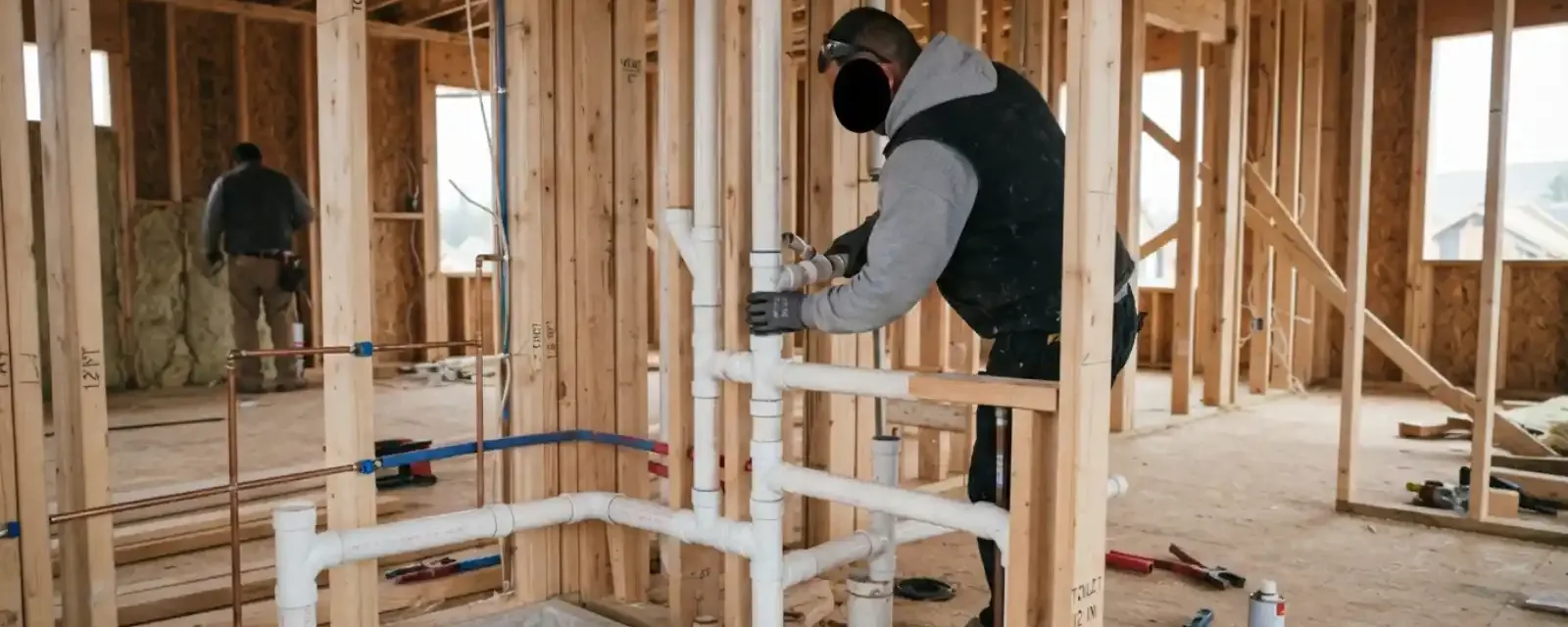
What counts as an installation
Installation covers new bathrooms and kitchens, relocating a sink or shower, adding a laundry or a utility sink, new shutoff valves, an outdoor hose bib or a line for an appliance. It overlaps with remodeling, and plumbing is the part that must be right because it ends up behind finished walls.
Emergency fixes are different. For a failed faucet, toilet or disposal, see faucet repair, toilet repair or garbage disposal repair.
How a project gets planned
- Walk the site. The plumber checks where supply, drain and vent can run and whether the existing lines can handle new load.
- Draw the plan. Fixture locations, pipe routes and any wall or floor openings are agreed.
- Permit. The plumber or contractor submits what the City requires.
- Rough-in and inspect. Pipes go in before walls close and an inspection happens.
- Set fixtures. After finishes are done, fixtures are installed and tested.
Drains need slope, and vents need a path to the roof or an approved alternative. Those two things decide whether a fixture can go where you want it. A shower far from the existing drain may need a floor opening.
Planning a plumbing project? Call to schedule a site visit.
Call (650) 860-1670| Job | Main factor | Notes |
|---|---|---|
| Add a bathroom | Drain and vent path | Usually needs a permit |
| Move a sink | Drain slope | Depends on floor and wall |
| Laundry hookup | Supply, drain and shutoffs | Adds a standpipe or box |
| Outdoor hose bib | Wall penetration and backflow device | Simple |
| Replace fixtures in a remodel | Fixture rules | See permit note |
What drives installation pricing
- Distance from existing lines. Longer runs mean more pipe and labor.
- Access. Open framing is cheaper than finished walls and slabs.
- Fixtures. The fixtures you choose are often the largest variable.
- Permit and inspection. Fees and wait times are part of the plan.
- Coordination. Working with an electrician, tiler or general contractor affects scheduling.
Ask for the price in writing with fixtures and permit listed separately so you can compare quotes fairly. Plans change during a remodel, and extra work is priced before it is done.
Drain, waste and vent: the part you never see
Supply pipes get the attention, but drains decide whether a fixture can go where you want it. A drain needs a steady slope toward the main line, a trap to hold a water seal and a vent so the water can move without gurgling or pulling the trap dry.
A sink on an exterior wall is usually easy to vent. A bathroom added in the middle of a house may need a vent routed through the attic. A shower in a slab home may need a trench cut in the floor for the drain. Those facts shape the price long before a fixture is chosen.
Choosing fixtures that suit the plumbing
- Check rough-in dimensions for toilets, which differ by model.
- Confirm the water pressure and flow a shower valve or body spray needs.
- Pick faucets with shutoff valves you can reach.
- Choose a drain size suited to the fixture, as a large tub drains faster than a small trap can handle.
- Ask whether a fixture needs a dedicated circuit or a nearby outlet, as for a bidet seat or a disposal.
Buy fixtures after the rough-in is planned, not before. A fixture that does not fit the layout becomes a return or a change order.
Permits and water-conserving fixtures
The Mountain View Building Division handles plumbing permits and can be reached at 650-903-6313 or building@mountainview.gov. For single-family alterations with a permit, the City's guidance under Civil Code sections 1101.1 to 1101.8 says noncompliant plumbing fixtures must be replaced with water-conserving ones, and a signed flow rate certificate goes back to the Division before final inspection. Ask whether your project falls under it before you buy fixtures.
Fixture drains, traps and vents are laid out to the California Plumbing Code, Part 5 of Title 24, which is why a layout that looks easy on paper still needs a plumber's eye before walls close.
Plumbing installation questions
Do I need a permit for plumbing installation in Mountain View?
Often yes for new lines, new fixtures and layout changes. Call the Building Division at 650-903-6313 to confirm for your project.
Can you move a sink or toilet?
Usually, if drain slope and venting allow. The plumber checks the floor and walls first.
Do you supply the fixtures?
You can supply them or ask the plumber to source them. Either way, the quote shows who provides what.
How long does an installation take?
It depends on scope. A single fixture is a short visit. A bathroom addition takes days across rough-in and finish stages.
Do you work with my contractor?
Yes. The plumber schedules around the electrician, tiler and general contractor.