
A leaking main line cannot wait
Water under pressure from the meter is leaking at full rate. A wet patch that stays wet, a sunken area in the lawn or driveway, a hissing sound near the meter and a sudden drop in pressure are the signs. The bill climbs while you wait.
Close the house valve, which the City says is typically near a hose bib. Then check the meter. If the leak indicator still turns with the house valve closed, the leak is between the house and the meter, and you need a plumber.
Repair, reroute or replace
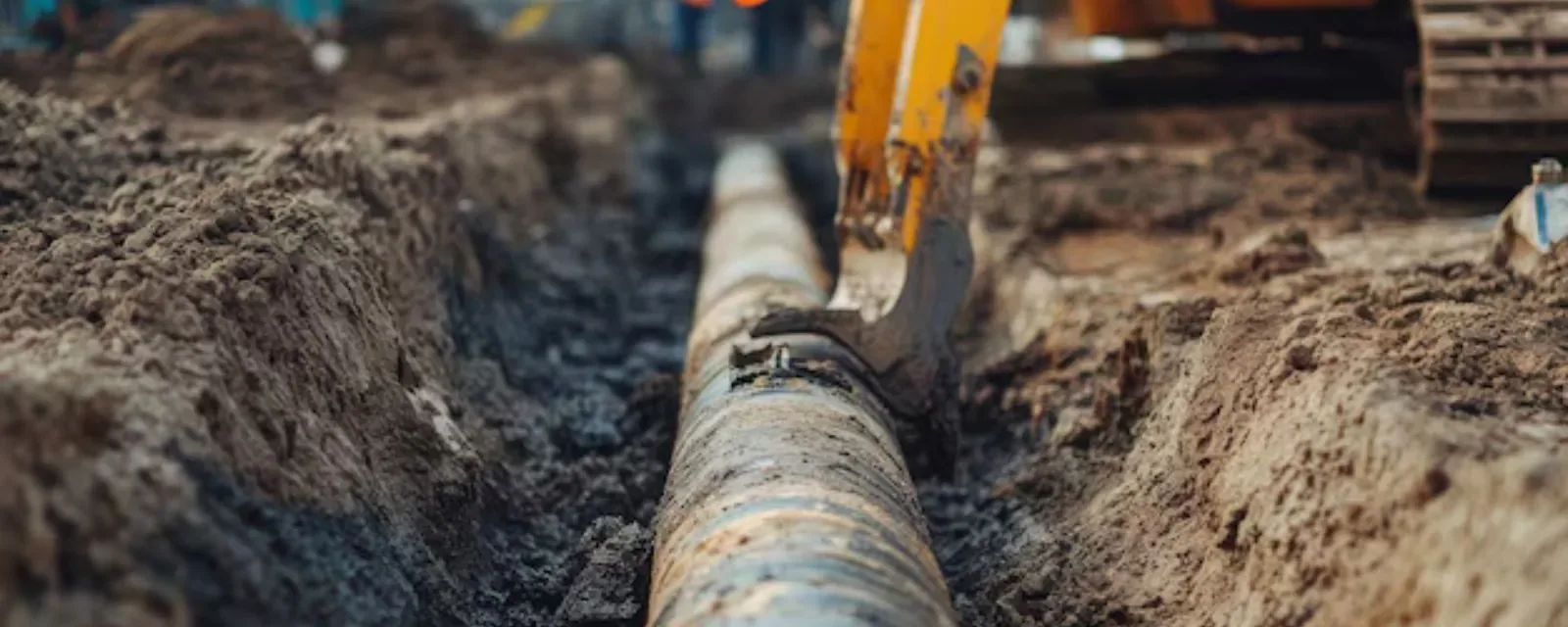
A short leak in a line that is otherwise sound can be repaired by digging down to the break and replacing the section. A line that has leaked in several places, or is made of an old material, is often better replaced in full.
| Option | When it fits | What to expect |
|---|---|---|
| Spot repair | One break, line in good shape | Small dig, quick fix |
| Full replacement, trench | Multiple leaks or old material | Longer dig, new line from meter to house |
| Trenchless replacement | Clear path, want less surface damage | Entry and exit pits, less lawn damage |
The plumber shows you the choices once the leak is located. Replacement is more expensive today and less likely to need a second visit.
How the job runs
- Locate the leak. Pressure and acoustic tools find the spot along the line.
- Call before you dig. Digging requires a utility locate request so you do not strike a gas, electric or other line.
- Dig and repair. The plumber exposes the line and fixes or replaces it.
- Test and backfill. The line is pressure tested before the trench is closed.
Wet patch in the yard? Call the 24/7 line.
Call (650) 860-1670What changes the price of water line work
- Length of the line. The distance from meter to house sets how much pipe and digging is involved.
- Depth and path. A line under a driveway, patio or tree roots is harder.
- Method. Trench and trenchless differ in cost and restoration.
- Pipe material. The replacement pipe and fittings affect price.
- Restoration. Lawn, paving and landscaping repair after digging are extra.
Insurance rarely covers the pipe itself, though it may cover resulting damage. The plumber gives you the price for repair and replacement before digging.
Signs of a failing water line before it leaks
- Pressure that has dropped over time at every fixture.
- Brown or cloudy water after the main is used heavily.
- A hum or vibration at the house entry.
- A bill that creeps up with no change in use.
- A patch of green lawn that stays unusually lush.
Any of these can point to a line that is corroding or leaking slowly. A plumber can measure pressure at the house and run a leak test before the line fails altogether.
Pressure regulators and why they matter here
Many houses have a pressure-reducing valve near the main. If it fails, pressure can rise and strain pipes, fixtures and the water heater. If it is set too low, flow feels weak at every tap. A plumber checks it during a water line visit because the symptoms overlap.
Where the City's meter ends and your responsibility begins
The City of Mountain View's meter instructions describe the meter as sitting in a concrete box, about 15 by 20 inches, near the curb or sidewalk. You can lift the lid to read the dial, but leave the meter itself alone. Before you authorize a dig, ask the City's Public Works where its responsibility ends and yours begins, so the repair is planned on the right side of that line.
A buried service line is plumbing work under the California Plumbing Code, and the City tells you whether the repair or replacement needs a permit and an inspection.
Water Line Repair questions
Is emergency water line repair available at night in Mountain View?
Yes. Call (650) 860-1670 at any hour. A licensed plumber is dispatched after you shut the house valve.
How do I know the leak is in the main line?
If the meter's leak indicator keeps turning with the house valve closed, the leak is between the house and the meter.
Do I need to call 811 before a dig?
Digging calls for a utility locate request. We make sure it is handled before the line is exposed.
Can the line be replaced without digging up the lawn?
Sometimes. Trenchless methods use small pits and avoid a full trench, if the path and soil allow it.
Who pays for the water lost to the leak?
The meter measures usage, so the lost water appears on the bill. The City's conservation page notes a one-time reduction may be available after repair.