
Why coconut oil is worse than most
Coconut oil melts at a temperature not far above a warm room, so it is liquid in a hot pan and solid in a cool pipe. Warm water carries it a short distance, then it cools and sticks to the pipe wall. It builds up in layers, trapping food particles, hair and paper.
Other fats do the same, but oils that stay liquid at room temperature can pass through more easily. Coconut oil, butter, bacon grease and lard are the usual culprits. Hot water does not fix the problem. It moves the grease farther down the line where it sets out of sight.
What to do with cooking oil instead
- Let used oil cool and pour it into a sealed container, then put it in the trash.
- Wipe greasy pans with a paper towel before washing.
- Use a sink strainer so scraps do not reach the drain.
- Never flush oil down the toilet.
The same rule applies to melted oil from skin or hair products. It does not belong in a drain either.
Drain already clogged with grease? Call the 24/7 line.
Call (650) 860-1670| Sign | Likely stage | Response |
|---|---|---|
| Slow kitchen drain | Early buildup | Stop pouring fat, try a plunger |
| Gurgling and smell | Buildup is growing | Call for cable or jetting |
| Backups in several drains | Grease in the branch or main | Call promptly |
| Repeated clogs | Coated pipe wall | Ask about jetting and a camera look |
Clearing a grease clog
A plunger can help with a small clog near the drain opening. Hot water and dish soap may soften a light film. Chemical drain cleaners are a poor choice, because they often fail on grease and leave caustic liquid in the pipe.
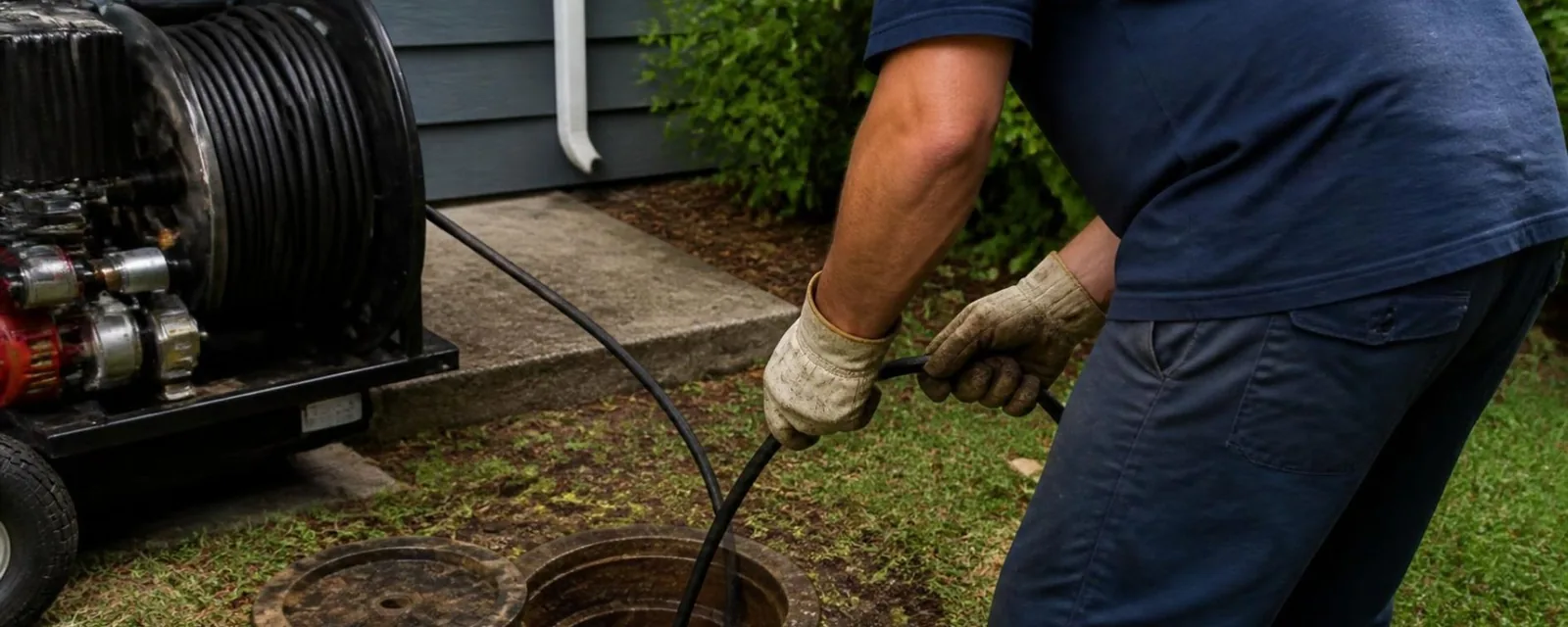
A plumber uses a cable to break the blockage and, when grease coats the wall, hydro jetting to scour it clean. That is the right tool when a cable keeps opening the line only for it to clog again. See drain cleaning for how the choice is made.
When the grease is in the main line
Grease does not stay in the kitchen branch. It can travel to the main and set where the line bends or where roots have taken hold. If more than one fixture is backing up, it is a sewer line cleaning case.
A sewer camera inspection shows how much grease has built up and whether a damaged section is trapping it.
Other things that behave like grease
Coconut oil is not alone. Butter, shortening, lard, bacon fat, salad dressing, mayonnaise, peanut butter and some lotions all contain fats that set in cool pipes. Even small amounts add up over months, especially in a kitchen branch with a gentle slope.
Cooking oil that stays liquid at room temperature, such as vegetable oil, is less likely to set in the pipe but still clings to the walls and traps food. The rule does not change. Keep fats out of the sink, and wipe pans before washing.
Kitchen habits that protect the drain
- Keep a jar by the stove for used fat and bin it when full.
- Scrape plates into the trash or compost before rinsing.
- Use a mesh strainer in the sink.
- Run the tap on cool water while a disposal is on.
- Do not rely on a hot water flush after pouring fat.
For restaurants and shops, grease is a daily load. See commercial plumbing for after-hours clearing and the idea of regular jetting.
A note on drain cleaners
A chemical cleaner may open a small hole in a grease clog, but it rarely removes the lining of the pipe, and the liquid can sit in a blocked line and burn skin when a plumber later opens the trap. If you use one, follow the label and never mix products. If it does not clear the drain on the first try, do not repeat it. Call a plumber instead.
A quick comparison of common cooking fats
| Fat | State in a cool pipe | Risk |
|---|---|---|
| Coconut oil | Solid | High |
| Butter and lard | Solid | High |
| Bacon grease | Solid | High |
| Vegetable oil | Liquid but sticky | Moderate |
| Olive oil | Liquid but sticky | Moderate |
Solid fats are the worst offenders, but any cooking fat can coat a pipe wall over time.
Signs grease is building in your pipes
Grease does not announce itself. A kitchen sink that drains a little slower each month, a faint sour smell from the drain and gurgling when the dishwasher runs are early signs. Standing water that takes a minute to clear is a sign the pipe is narrowing.
If you notice these, act before a full blockage. A cleaning visit while the drain still flows is cheaper than an emergency call when it stops completely.
Where the grease ends up in Mountain View
The City of Mountain View's FAQ places the home's plumbing and the lateral on the property owner, with the City clearing its own mains. That means grease that sets in your lateral is your clog. Wastewater then goes to the Palo Alto Regional Water Quality Control Plant, which also serves Los Altos, Los Altos Hills, Palo Alto and Stanford.
The same rules of thumb apply in Los Altos, where the City draws the owner's line at the first joint after the property line.
If grease has already blocked a line, the service area page shows where a plumber can be dispatched.
Businesses that handle grease at scale answer to the plumbing code and to local sewer agency requirements that a home kitchen does not face.
Questions about this topic
Does coconut oil clog drains?
Yes. It solidifies in cool pipes, coats the walls and traps debris.
Is it safe to pour coconut oil down the drain with hot water?
No. The hot water only moves it further, where it sets.
How do I dispose of coconut oil?
Let it cool, seal it in a container and put it in the trash.
My drain is slow. Is it grease?
Possibly. A kitchen drain that slows over weeks is a classic grease sign.
What if I already poured oil down the sink?
Run hot water with dish soap for a few minutes and avoid repeating it. If the drain slows, call a plumber before it blocks.